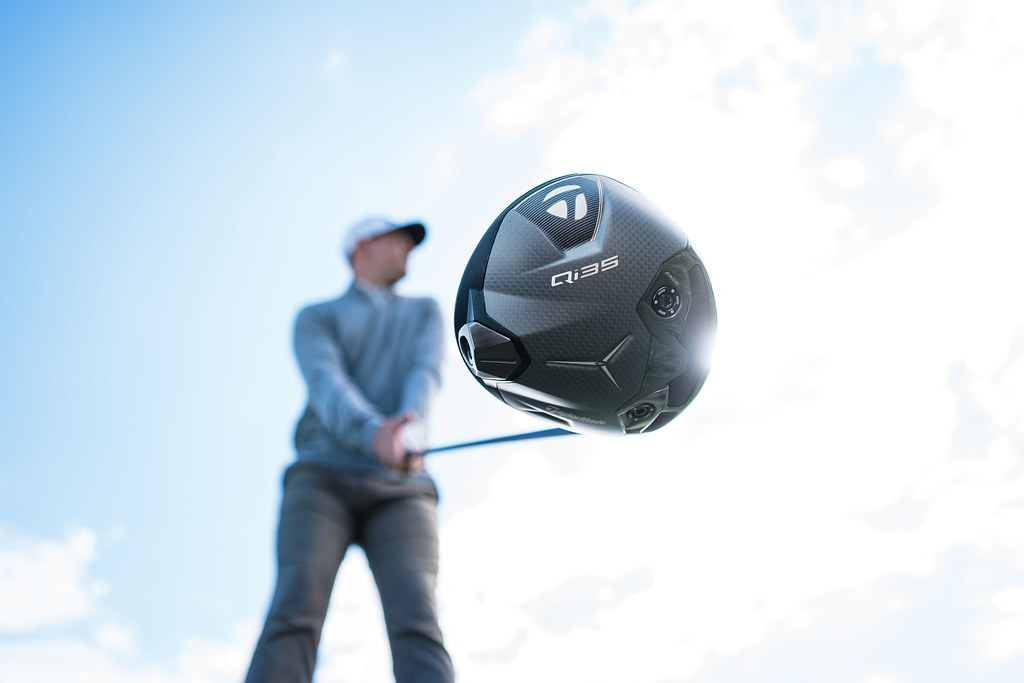
Every January, the same thing happens. A new driver drops. The ads show it splitting fairways down the middle, and somewhere in the back of your mind a quiet voice says: maybe that's the one. Maybe this is the year you finally hit it far enough to actually play well. You pull out your phone, check the price — $600, maybe more — and you start to convince yourself it's worth it.
It probably isn't. And the data makes it uncomfortable to argue.
What a New Driver Actually Gets You
Let's be precise about this, because the marketing makes it impossible to be. A new driver, properly fitted, will typically add 5 to 15 yards of carry for the average amateur golfer. That's not nothing. But when you run that number through the strokes gained framework — the same framework the PGA Tour uses to measure every shot — it starts to look a lot less impressive.
Where the Shots Actually Go
Here's the part that changes the conversation. Shot tracking data from tens of thousands of amateur rounds — collected by platforms like Shot Scope and Arccos — consistently shows the same thing: the biggest gap between a 10-handicap and a 5-handicap isn't driving distance. It's approach play.
The 5-handicap hits greens in regulation more often, yes. But more importantly, when they do hit greens, they leave themselves in birdie range. And when they miss, they miss by less. The approach shot — that 100 to 175 yard iron shot into the green — is where the strokes disappear for most amateur golfers. Not off the tee.
"Approach play is where the biggest difference between high and low handicaps lies. This is where you should be investing your time if you are looking to improve."
Mark Broadie's research on strokes gained — the foundational work that changed how golf performance is measured — put it plainly: shots outside 100 yards account for roughly two-thirds of the scoring differential between golfers. But within that two-thirds, approach shots carry more weight than tee shots. You can see this play out week to week on Live Stats — the driver is important. It's just not the most important thing.
The Math on $600
So let's do the math honestly. A new driver that adds 10 yards and keeps you in the fairway is worth about 0.3 strokes per round — roughly one shot every three rounds. A serious improvement in approach consistency from 100 to 150 yards can be worth 2 to 3 shots per round. That's not a typo. The same $600 you'd spend on a driver could get you a handful of lessons from a coach who understands ball striking, or a properly fitted set of irons, and the return would be an order of magnitude higher.
None of this means a new driver is worthless. If your current one is genuinely mismatched to your swing — wrong loft, wrong shaft flex, wrong everything — getting fitted makes sense. But that's a fitting conversation, not a marketing one. And for most golfers buying a new driver in January, the problem isn't the club.
What to Do Instead
The fastest way to lower your handicap isn't a hardware upgrade. It's figuring out where you're actually losing shots — and for most golfers, the answer is somewhere between 100 and 175 yards. Track a few rounds with a shot-tracking app. Look at your strokes gained by category. The number that's bleeding the most is almost certainly not the one you'd guess. Or skip the tracking and take Divot Lab's practice diagnosis — eight questions that identify your actual weakness profile.
The driver will still be there in March. But the shots you're throwing away with your 7-iron? Those are happening right now.
Stats via DataGolf · Shot Scope amateur data · Strokes gained framework