Every golfer has heard it. Drive for show, putt for dough. It's the oldest piece of conventional wisdom in the game, and for decades it went basically unchallenged. Then strokes gained data arrived, and it quietly dismantled the whole thing. The stat that actually separates winners from the rest of the field isn't driving. It isn't putting. It's the shot in between — and most people don't even realize it's there.
Four Categories. One That Matters Most.
Strokes gained breaks the game into four buckets: off the tee, approach the green, around the green, and putting. Each one measures how a player performs relative to the field in that specific part of the game. The conventional assumption is that driving and putting carry the most weight — driving because it sets up everything that follows, putting because it's where birdies and bogeys actually happen.
A detailed statistical analysis of PGA Tour data from 2015 through 2022 tested that assumption directly. The methodology was clean: isolate each strokes gained category, measure how strongly it correlates with tournament finishing position, then run permutation tests to see what happens to the model when you remove each one.
The Numbers Behind the Myth
When you flip the question — instead of asking which category predicts finishing position, ask what the top finishers actually look like in the data — the picture gets even sharper. Players who finished in the top 1% of tournaments gained an average of 1.31 strokes per round on approach shots. On driving, that number was 0.68. Nearly double. The best tournament performers weren't separating themselves with their drivers. They were doing it with their irons.
"Shots outside of 100 yards — tee shots and approach shots — account for roughly two-thirds of scoring differential between golfers at any level."
That framing comes from Mark Broadie's foundational research on strokes gained, and it holds at every level of the game. The long game isn't just important — it's dominant. But within the long game, approach play carries more predictive weight than driving, because it's the shot that most directly determines what you're asking your putter to do.
Why the Approach Shot Is the Fulcrum
Think about what an approach shot actually controls. A good drive gets you to the fairway. A good approach gets you on the green — and more than that, it gets you on the green in a position where birdie is realistic. The difference between a ball that lands 8 feet from the pin and one that lands 30 feet away isn't just distance. It's the difference between a shot you can actually make and a routine two-putt.
That gap compounds fast. Over 18 holes, a player who consistently leaves themselves in birdie range from their approach shots will outscore a player who hits it just as far off the tee but leaves themselves routine two-putt territory every time. The approach shot is the fulcrum. Everything else — driving, short game, putting — pivots around what happens when the iron lands.
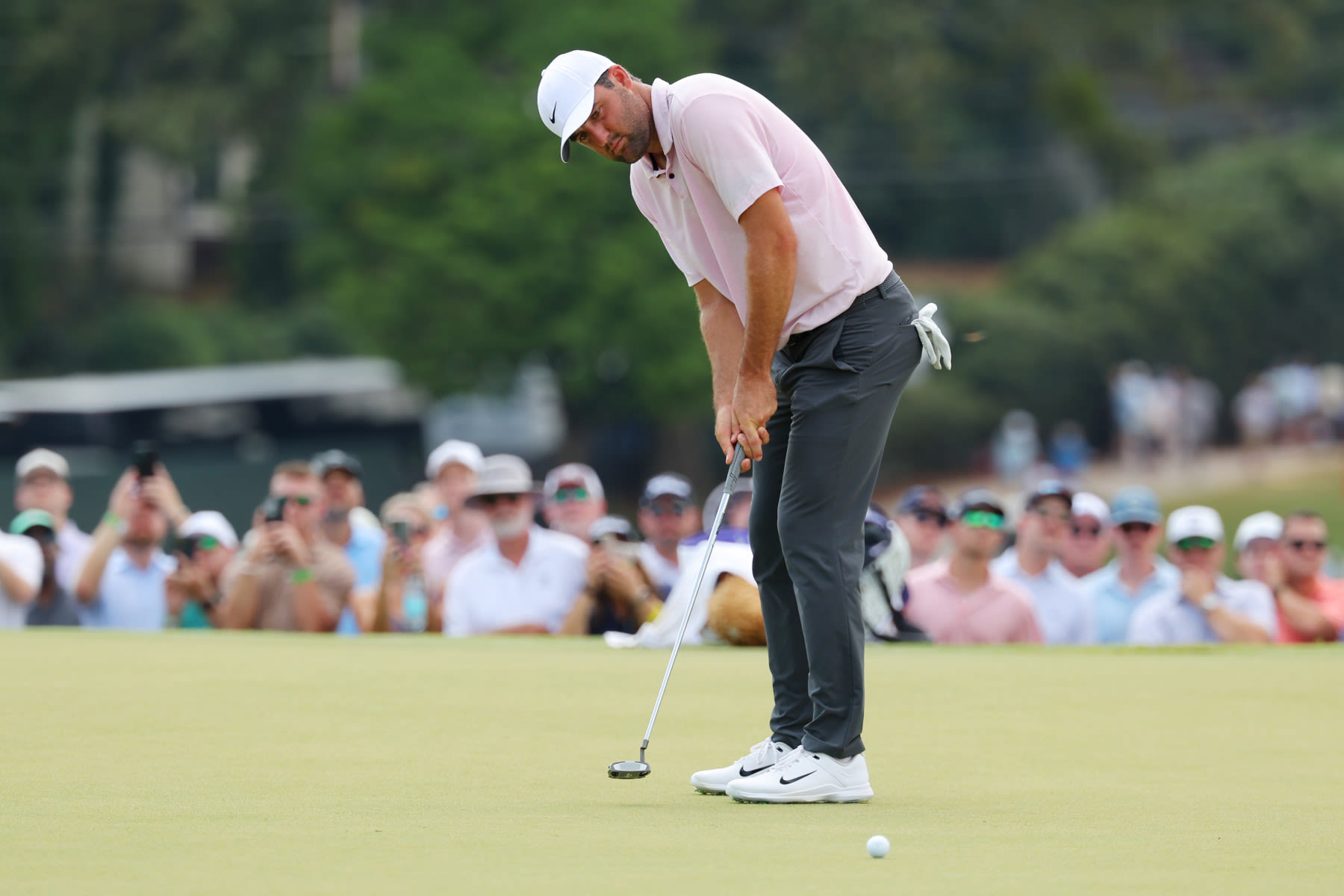
Scottie Scheffler made this visible at the highest level in 2025. He led the PGA Tour in SG: Approach — a stat you can track in real time on Live Stats — and also led in total strokes gained, scoring average, and wins. That's not coincidence. His approach numbers were the engine behind all of it.
What This Changes
If you take one thing from the data, it's this: the most valuable practice you can do isn't necessarily what feels the most urgent. Most golfers, when they're frustrated, reach for the driver or head to the putting green. The data says the range session with a 7-iron might be worth more than either.
That's not a flashy conclusion. But it's the one the numbers consistently support — at the tour level, and at every handicap below it. Not sure what your specific weakness profile looks like? Take the free diagnosis — it takes two minutes.
Stats via DataGolf · PGA Tour shot-level data · 2015–2025 analysis